

Our Collection
All our baubles, ornaments, toppers, tableware, nutcrackers, and ribbons are made from pure materials. Many of our Christmas baubles are crafted from glass, paper, dolomite, or porcelain. Our nutcrackers are all made of wood or glass. A large part of our collection consists of true artisan pieces, handcrafted with care. Our exclusive ornaments are mouth-blown and then hand-painted.
The Production of Handcrafted Baubles and Ornaments
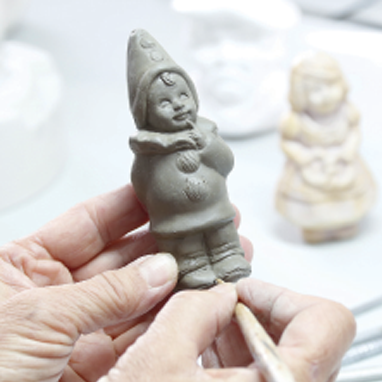
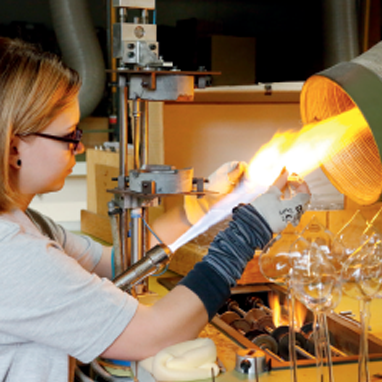
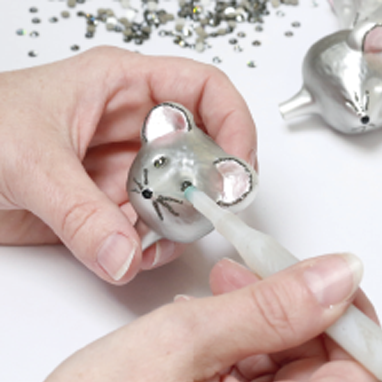
Many of our baubles and ornaments are mouth-blown and hand-painted. Each figure is created using a unique mold. At the Inge Glas factory in Germany, over 15,000 molds have been created in the past two centuries, with new ones added each year. The molds consist of two parts that are clamped around the hot glass. Then, air is blown into the glass by mouth so that it expands into the shape of the mold. Round and olive-shaped baubles are free-blown by highly skilled glassblowers. Inge Glas is especially known for its nostalgic clip-on birds with spun glass tails. In recent years, their popularity has grown due to their limited-edition annual ornaments, which have become true collectors' items.
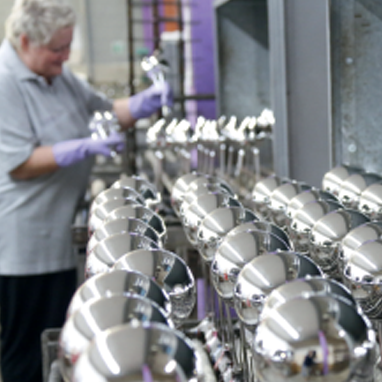
Once the blown baubles have cooled, they are coated with a pure silver solution. Each bauble is filled with the solution, leaving a thin layer of silver on the inside. This silver coating gives the baubles their distinctive shine.
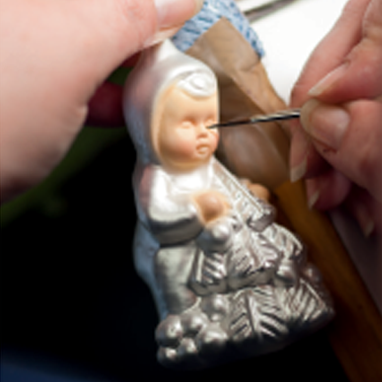
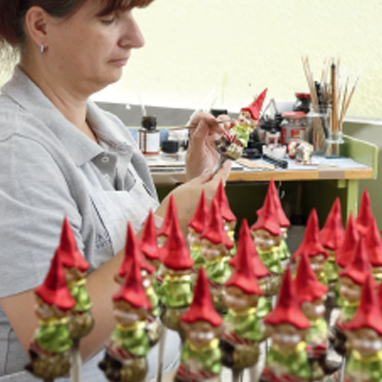
It takes over 30 steps to achieve the final look of a bauble. Eyes, pupils, and eyebrows are painted with a steady hand by the most experienced painters. Each bauble is created from start to finish by a single painter—making every hand-painted bauble truly unique.
The Production of Handcrafted Nutcrackers
The production of a nutcracker starts with selecting the wood. Many nutcrackers are made of linden wood, although birch and beech are also used. Linden is easy to work with, and its colour closely resembles that of human skin. The parts of the nutcracker are first cut to size, then turned on a lathe to form the arms, torso, legs, and head.
Traditional nutcrackers are stained brown and then lacquered several times to ensure long-lasting durability. The whites of the eyes and pupils are applied by hand using a fine brush. The red blush on the cheeks is airbrushed on.
Most parts of the nutcracker are joined using wooden dowels, though some are screwed together. Traditional nutcracker hair is made from rabbit fur, but nowadays most hair is made from the down of slaughtered chickens.
Our nutcrackers are decorated in many ways: with weapons, capes, or outfits. Often, the front is inlaid with shimmering sequins—each one applied by hand.